


DammagedAgain
V I P
Well if you're concerned about additives such as steroids, antibiotics and expense of the cattle/pork/chicken Industry, Italy seems to be going in a direction that doesn't require those and there's No Farting involved like the 4 legged animals so is good for the Environment.Then you should know better....battery hens should be gone. "A hamburger, or simply burger, is a food consisting of fillings—usually a patty of ground meat, typically beef" - not pork, despite the name begins with HAM which actually is about pork not beef. Our farming is far stricter than say the US in terms of hygiene...for example bleached chicken. Almost all of the cattle and sheep are pumped full of roids and anti biotics, which gets passed down to the humans through consumption, leading to an issue with finding anti biotics that work on a person. This is unacceptable practice and the FDA have done nothing about any of it (last I heard).
You are describing a time so much earlier than the 70s and since then farming has evolved a damn sight more than you "recollect" of what it was like back then. If you want to blame anyone for this mess....blame yourself, just like everyone else should do. Humans are outgrowing the resources causing companies to cut as many corners as they possibly can and then swear the peg is still square.
Welcome to the "World of Cricket Farming!" (And for Wease, No Bacon Grease!")
 Might want to go FULL SCREEN so you don't miss a delicious moment!
In a small room near the Alps in northern Italy, containers filled with millions of crickets are stacked on top of each other.Might want to go FULL SCREEN so you don't miss a delicious moment!Jumping and chirping loudly - these crickets are about to become food.
The process is simple: they are frozen, boiled, dried, and then pulverized.
Here at the Italian Cricket Farm, the biggest insect farm in the country, about one million crickets are turned into food ingredients every day.
Ivan Albano, who runs the farm, opens a container to reveal a light brown flour that can be used in the production of pasta, bread, pancakes, energy bars - and even sports drinks.
Eating crickets, ants and worms has been common in parts of the world like Asia for thousands of years.
Now, after the EU approved the sale of insects for human consumption earlier this year, will there be a shift in attitudes across Europe?

"We will oppose, by any means and in any place, this madness that would impoverish our agriculture and our culture," Deputy Prime Minister Matteo Salvini wrote on Facebook.
But is that all about to change? Several Italian producers have been perfecting cricket pasta, pizza and snacks.
"What we do here is very sustainable," says Ivan. "To produce one kilo of cricket powder, we only use about 12 litres of water," he adds, pointing out that producing the same quantity of protein from cows requires thousands of litres of water.
Farming insects also requires just a fraction of the land used to produce meat. Given the pollution caused by the meat and dairy industry, more and more scientists believe insects could be key to tackling climate change.
At a restaurant near Turin, chef Simone Loddo has adapted his fresh pasta recipe, which dates back nearly 1,000 years - the dough is now 15% cricket powder.
It emanates a strong, nutty smell.
Some of the diners refuse to try the cricket tagliatelle, but those who do - including me - are surprised at how good it tastes.
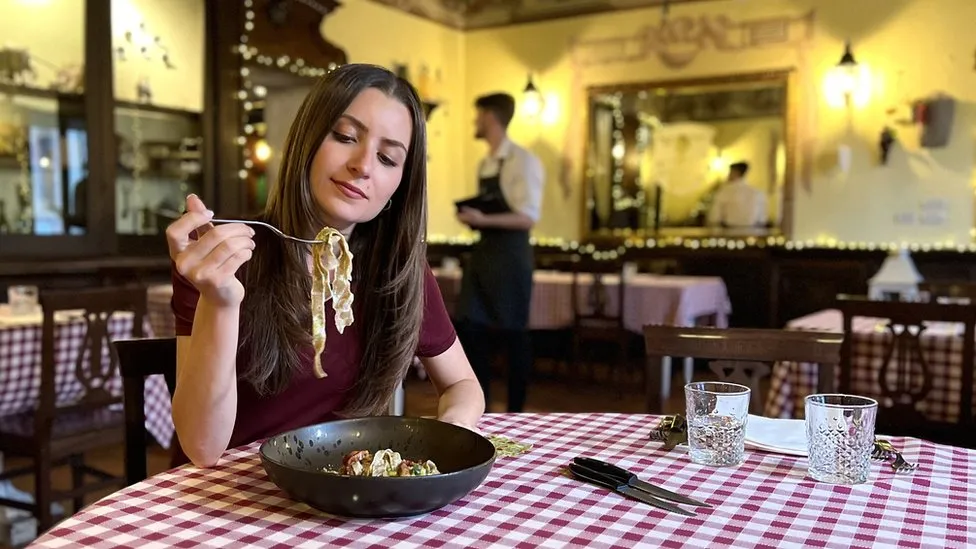
Diners at the Turin restaurant that serves the insect pasta are trying cricket-based products out of curiosity.
But is this a realistic option for those who want to eat less meat? The main issue is the price.
"If you want to buy cricket-based food, it's going to cost you," says Ivan. "Cricket flour is a luxury product. It costs about €60 (£52) per kilogram. If you take cricket pasta for example, one pack can cost up to €8."
That's up to eight times more than regular pasta at the supermarket.
For now, insect food remains a niche option in Western societies, as farmers can sell poultry and beef at lower prices.
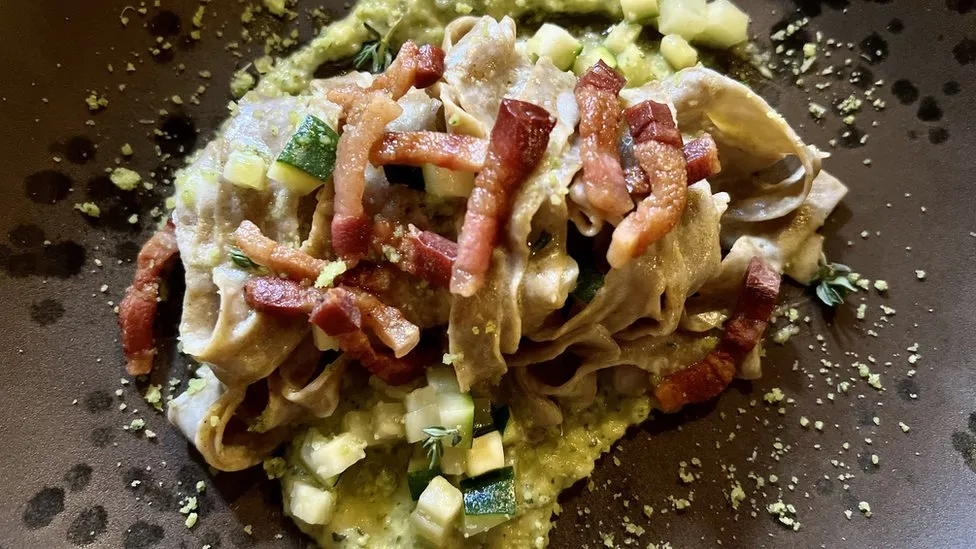
Cricket tagliatelle served with zucchini, zucchini cream, crispy bacon, parmesan and basil
"The meat I produce is much cheaper than cricket flour, and it's very good quality," says Claudio Lauteri, who owns a farm near Rome that's been in his family for four generations.
But it's not just about price. It's about social acceptance.
Across Italy, the number of people living to the age of 100 and beyond is rising fast. Many point to the Mediterranean diet as the Holy Grail for a healthy lifestyle.
"Italians have been eating meat for centuries. With moderation, it's definitely healthy," says Claudio.
He believes that insect food could be a threat to Italian culinary tradition - which is something universally sacred in this country.
"These products are garbage," he says. "We are not used to them, they are not part of the Mediterranean diet. And they could be a threat for people: we don't know what eating insects can do to our bodies.
But it's not just about price. It's about social acceptance.
Across Italy, the number of people living to the age of 100 and beyond is rising fast. Many point to the Mediterranean diet as the Holy Grail for a healthy lifestyle.
"Italians have been eating meat for centuries. With moderation, it's definitely healthy," says Claudio.
He believes that insect food could be a threat to Italian culinary tradition - which is something universally sacred in this country.
"These products are garbage," he says. "We are not used to them, they are not part of the Mediterranean diet. And they could be a threat for people: we don't know what eating insects can do to our bodies.
"I'm absolutely against these new food products. I refuse to eat them."
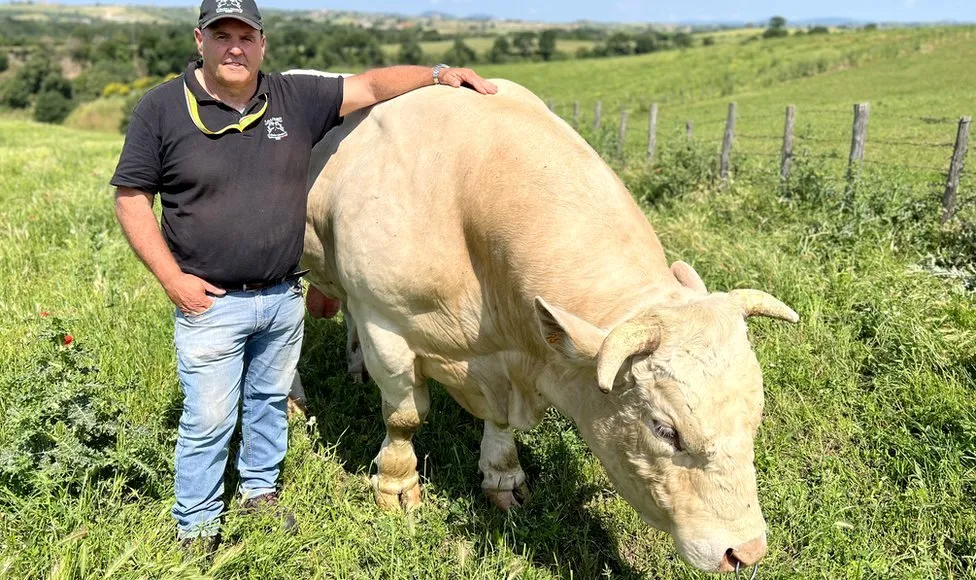
While insect farming is increasing in Europe, so too is hostility towards the idea.
The EU decision to approve insects for human consumption was described by a member of Italy's ruling far-right Brothers of Italy party as "bordering on madness".
Prime Minister Giorgia Meloni, who has referred to Italy as a "food superpower", created a Made in Italy ministry when she was elected, with the aim of safeguarding tradition.
"Insect products are arriving on supermarket shelves! Flour, larvae - good, delicious," she said in a tone of disgust in a video.
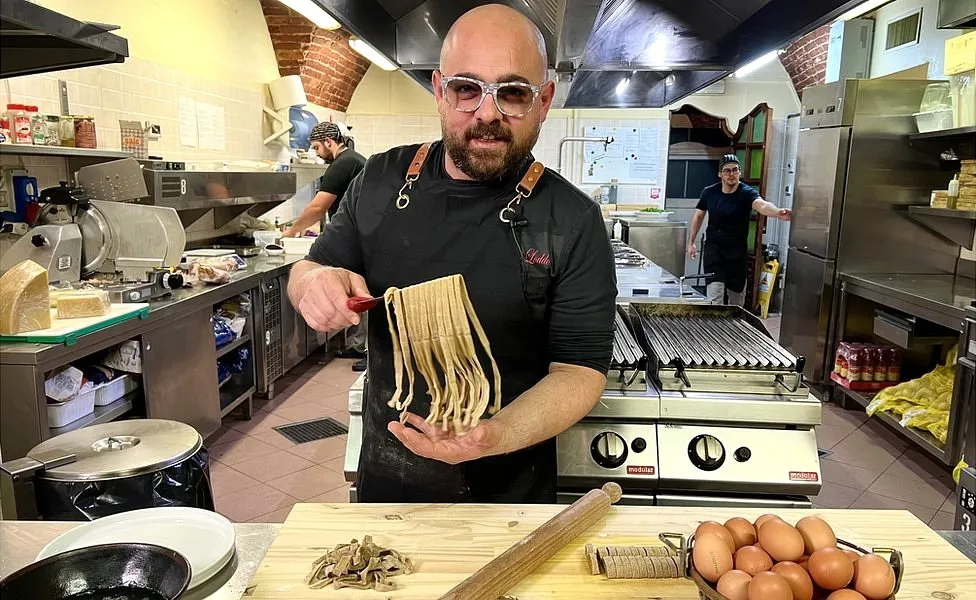
Chef Simone Loddo makes pasta using flour containing crickets to serve to customers at his restaurant near Turin
In Poland, it has become a hot topic ahead of an election this year. In March, politicians from the two main parties accused each other of introducing policies that would force citizens to eat insects - the leader of the main opposition party, Donald Tusk, labelled the government a "promoter of worm soup".
Meanwhile, Austria, Belgium and the Netherlands are more receptive to eating insects. In Austria, they eat dried insects for aperitivo, and Belgians are open to eating mealworms in energy shakes and bars, burgers and soups.
"The impact on the environment is almost zero. We are a piece of the puzzle that could save the planet."
More "CRICKETS AT LINK" (SKIP THE BACON)
Code:
https://www.bbc.com/news/world-europe-66022857 Seems to be spreading.


