Veterans at 5 VA Medical Facilities Will Have to Start Making Copayments on Prescriptions Again
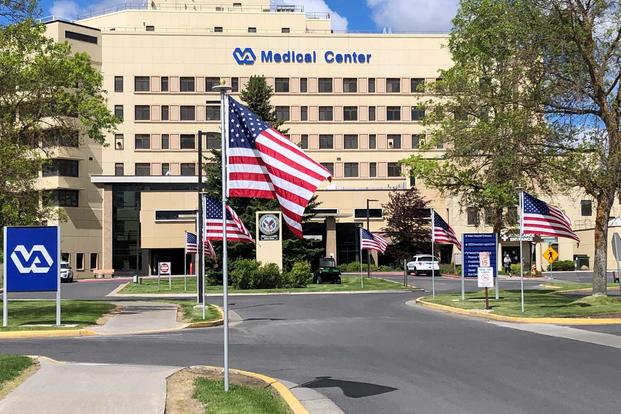
Corrupted files in the electronic health records system at Mann-Grandstaff Veterans Affairs Medical Center led to operations closures. The facility is a test hospital for the VA's $16 billion electronic medical records platform.
Thousands of veterans will resume paying a portion of their prescription medication cost following a two-year suspension of the requirement at five Veterans Affairs facilities served by the department's new electronic health records system. The VA is notifying affected patients in the Pacific Northwest and Ohio this week by letter and email of the impending change, which will go into effect Oct. 1.
The affected hospitals are the Mann-Grandstaff VA Medical Center and Jonathan W. Wainwright Memorial VA Medical Center in Washington; White City VA Medical Center and Roseburg VA Medical Center in Oregon; and the Chalmers P. Wylie Veterans Ambulatory Care Center in Columbus, Ohio.
The resumption does not affect the Captain James A. Lovell Federal Health Care Center in North Chicago, Illinois, which also uses the Oracle Cerner system, because copays were not suspended during system deployment earlier this year, according to VA Press Secretary Terrence Hayes.
Outpatient pharmacy copayments at the five VA hospitals and their affiliated clinics were suspended in 2022 after the facilities transitioned to the Oracle Cerner electronic health records system.
The VA previously had canceled and refunded copays across its entire health system from April 6, 2020, to Sept. 30, 2021, as a result of the COVID-19 pandemic.
Hayes said that copayments will appear in affected veterans' November statements. From then on, "pharmacy copayment charges will be seen on the next month's statement -- just as would happen for veterans receiving care and pharmacy benefits from any other VA medical center."
He added that, while copayments will resume, the department has not decided whether to pursue retroactive co-payments, which could, for some patients, tally thousands of dollars.
"VA is continuing to hold on collecting retroactive payments while we work with Congress and veterans service organization partners on potential relief for veterans," Hayes wrote in a statement provided to Military.com.
The $16 billion Oracle Cerner electronic health records system has a problematic history at the VA and is currently used at just five VA facilities and the Lovell Federal Health Center.
The pharmacy component of the system, which the VA now calls the federal electronic health records system, has proven particularly troublesome, with patients experiencing lost or delayed prescriptions, double orders and incorrect medications, among other issues.
In May, the VA Office of Inspector General determined that the new system contributed to pharmacy-related patient safety issues and that affected patients were not notified of the risk.
Oracle Cerner is developing an update to the pharmacy module to improve its effectiveness and accuracy, but the VA decided against installing the new version during the rollout at the North Chicago facility, with Dr. Neil Evans, acting program executive director for the VA's Electronic Health Record Modernization Integration Office, saying that, while it was working in the "vast majority of cases," it sometimes behaved "oddly" and was not ready for deployment.
All VA patients with the exception of those in Priority Group 1, which includes those rated 50% or higher for disability, those who can't work as a result of their disability and Medal of Honor recipients, are required to make pharmacy copayments. The VA caps yearly co-pays at $700.
Hayes said that, throughout the process, the VA will keep veterans apprised of any decisions about retroactive pay, and it encourages patients to reach out to the department regarding pharmacy billing or medical debt.
US ARMY SPC 5 whitefish Reporting
Viet-Nam Combat Veteran
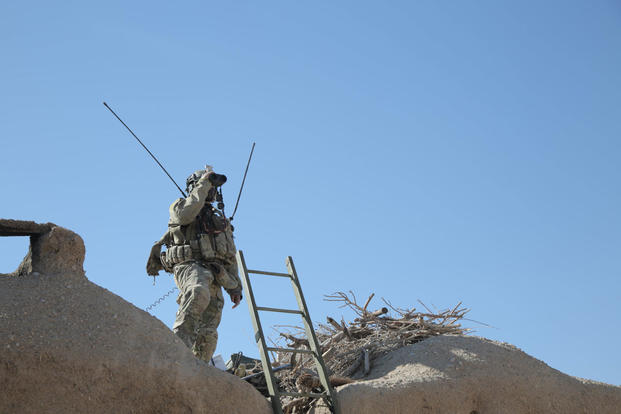
A combat controller, deployed with a U.S. Army Special Forces team in Afghanistan, searches for targets to provide close air support during an engagement with insurgents.
Hostile Fire and Imminent Danger Pay are payable for duty performed in an area designated as hazardous. You can't get Hostile Fire Pay (HFP) and Imminent Danger Pay (IDP) at the same time. Both are taxable, unless you are serving in a designated combat zone or support area.
The monthly rate is $225, and is payable when a member is subjected to hostile fire, explosion of hostile mines or other hostile action and is:
Performing duty in a hostile fire area;
Exposed to a hostile fire event;
On duty during a month in an area in which a hostile event occurred that place them in grave danger of physical injury;
Killed, injured, or wounded by hostile fire, explosion of a hostile fire event.
Hostile Fire and Imminent Danger pay are prorated for partial months - you are only paid for the time in a designated area.
This is Unreal. When I was in Viet-Nam 1969/1972 our Combat pay was only 68$ a month - Unreal, we were only worth 68 bucks each ...
US ARMY SPC 5 whitefish Reporting
Viet-Nam Combat Veteran
The Senate passed the House-introduced emergency appropriations bill to cover the VA's $3 billion-dollar budgetary shortfall. If a spending bill had not passed by the end of the week, the results would have been financially devastating to millions of veterans. It's worth noting that this bill would not have passed with bipartisan support if not for veteran advocates within Congress and the veteran community. The nearly 7 million veterans who rely on VA benefits, to include disability compensation and even the GI Bill, can now have peace of mind that benefits will be delivered on time, October 1st.
US ARMY SPC 5 whitefish Reporting
Viet-Nam Combat Veteran
Annual Cost-of-Living Boost for Veterans Benefits Finalized by Congress
Veterans will get a cost-of-living bump in their benefits next year after Congress passed annual legislation this week to guarantee the increase keeps pace with Social Security rates.
Before leaving town for an extended election-season break, the Senate approved the bill by voice vote Wednesday, sending the measure to President Joe Biden's desk for his expected signature. The House previously approved the bill by voice vote last week.
"At a time when folks are struggling with rising costs, from housing to groceries, veterans deserve absolute certainty when it comes to providing for their families," Senate Veterans Affairs Committee Chairman Jon Tester, D-Mont., said in a statement Thursday. "Boosting veterans' hard-earned benefits to keep pace with the cost of living is a necessary cost of war, and I'm proud this bipartisan legislation will deliver a benefits increase to millions of disabled veterans and survivors nationwide -- including 30,000 in Montana."
The bill specifically ties the increase to the annual cost-of-living adjustment in Social Security benefits. The 2025 rate for Social Security won't be announced by federal officials until Oct. 10.
But the advocacy group Senior Citizens League is projecting the cost-of-living increase will be 2.5%, the organization said in a news release earlier this month. That would be lower than recent years, but in line with historical norms. In 2023, beneficiaries saw their highest increase in decades at 8.7%. This year's increase was 3.2%.
In 2010, 2011 and 2016, there was zero increase.
While giving veterans an annual bump in their benefits is considered noncontroversial, Congress still must formally approve the increase every year and sometimes comes down to the wire in doing so.
The official approval of the increase this year was applauded by lawmakers in both parties.
"With the rising costs of goods and living expenses, many disabled veterans and their dependents, including survivors, rely on VA for essential financial support," Sen. Jerry Moran, R-Kan., ranking member of the Senate Veterans Affairs Committee, said in a statement Thursday. "Making certain earned benefits stay on pace with rising prices will help provide veterans and their families with much-needed peace of mind."
US ARMY SPC 5 whitefish Reporting
Viet-Nam Combat Veteran
In January 1973, the United States and North Vietnam concluded a final peace agreement, ending open hostilities between the two nations. War between North and South Vietnam continued, however, until April 30, 1975, when DRV forces captured Saigon, renaming it Ho Chi Minh City (Ho himself died in 1969).
More than two decades of violent conflict had inflicted a devastating toll on Vietnam's population: After years of warfare, an estimated 2 million Vietnamese were killed, while 3 million were wounded and another 12 million became refugees. Warfare had demolished the country's infrastructure and economy, and reconstruction proceeded slowly.
In 1976, Vietnam was unified as the Socialist Republic of Vietnam, though sporadic violence continued over the next 15 years, including conflicts with neighboring China and Cambodia. Under a broad free market policy put in place in 1986, the economy began to improve, boosted by oil export revenues and an influx of foreign capital. Trade and diplomatic relations between Vietnam and the U.S. resumed in the 1990s.
In the United States, the effects of the Vietnam War would linger long after the last troops returned home in 1973. The nation spent more than $120 billion on the conflict in Vietnam from 1965-73; this massive spending led to widespread inflation, exacerbated by a worldwide oil crisis in 1973 and skyrocketing fuel prices.
Psychologically, the effects ran even deeper. The war had pierced the myth of American invincibility and had bitterly divided the nation. Many returning veterans faced negative reactions from both opponents of the war (who viewed them as having killed innocent civilians) and its supporters (who saw them as having lost the war), along with physical damage including the effects of exposure to the toxic herbicide Agent Orange, millions of gallons of which had been dumped by U.S. planes on the dense forests of Vietnam.
In 1982, the Vietnam Veterans Memorial was unveiled in Washington, D.C. On it were inscribed the names of 57,939 American men and women killed or missing in the war; later additions brought that total to 58,200.
US ARMY SPC 5 whitefish Reporting
Viet-Nam Combat Veteran
Vietnam Dustoff Crews to Receive Congressional Gold Medal
President Biden has signed the Dustoff Crews of the Vietnam War Congressional Gold Medal Act into law. Long sought by advocates, this legislation recognizes the pilots, crew chiefs, and medics who served honorably during the Vietnam War aboard helicopter air ambulances. The honor is collectively awarded to the more than 3,000 service members who flew between combat zones and field hospitals. Plans for the official Congressional Gold Medal presentation ceremony are under way and will be announced by the White House.
DUSTOFF CREWS OF THE VIETNAM WAR CONGRESSIONAL GOLD MEDAL ACT
[[Page 138 STAT. 1550]]
Public Law 118-87
118th Congress
An Act
To award a Congressional Gold Medal to the United States Army Dustoff
crews of the Vietnam War, collectively, in recognition of their
extraordinary heroism and life-saving actions in Vietnam.
Be it enacted by the Senate and House of Representatives of the
United States of America in Congress assembled, <<NOTE: Dustoff Crews of
the Vietnam War Congressional Gold Medal Act. 31 USC 5111 note.>>
SECTION 1. SHORT TITLE.
This Act may be cited as the ``Dustoff Crews of the Vietnam War
Congressional Gold Medal Act''.
SEC. 2. FINDINGS.
The Congress finds that-- (1) a United States Army Dustoff crewman, including a pilot,
crew chief, and medic, is a helicopter crew member who served
honorably during the Vietnam War aboard helicopter air
ambulances, which were both nondivision and division assets
under the radio call signs `Dustoff'' and `Medevac'';
(2) Dustoff crews performed aeromedical evacuation for
United States, Vietnamese, and allied forces in Southeast Asia
from May 1962 through March 1973;
(3) nearing the end of World War II, the United States Army
began using helicopters for medical evacuation and years later,
during the Korean War, these helicopter air ambulances were
responsible for transporting 17,700 United States casualties;
(4) during the Vietnam War, with the use of helicopter air
ambulances, United States Army Dustoff crews pioneered the
concept of dedicated and rapid medical evacuation and
transported almost 900,000 United States, South Vietnamese, and
other allied sick and wounded, as well as wounded enemy forces;
(5) helicopters proved to be a revolutionary tool to assist
those injured on the battlefield;
(6) highly skilled and intrepid, Dustoff crews were able to
operate the helicopters and land them on almost any terrain in
nearly any weather to pick up wounded, after which the Dustoff
crews could provide care to these patients while transporting
them to ready medical facilities;
(7) the vital work of the Dustoff crews required consistent
combat exposure and often proved to be the difference between
life and death for wounded personnel;
(8) the revolutionary concept of a dedicated combat life-
saving system was cultivated and refined by United States
US ARMY SPC 5 whitefish Reporting
Viet-Nam Combat Veteran
Captured U.S. pilot major Dewey Waddell is guarded by a militiawoman with a gun and a bayonet on a rice field. Vietnam, 1967.
The man in the picture keeps his eyes to the ground. Though there are no walls keeping him in — the image was taken in a rice field — there's no mistaking that he is a prisoner. The rope that binds his arms is only just visible, but the militiawoman guarding him with her bayonet is plain to see.
And yet, 50 years after that striking photograph was taken, he remembers that the event it captures held for him a secret sense of possibility. That day was a breath of relief, and cause for a silent prayer of gratitude.
The man's name is Dewey Wayne Waddell. Today, at 82, he's retired and living in Marietta, Ga. Retired Air Force Col. Waddell (who goes by Wayne) spoke to TIME about the story behind the picture.
"It's quite a shock when you're zooming along and then all of a sudden you're sitting on the ground," Waddell says of what happened on July 5, 1967, when his plane was shot down on a mission over North Vietnam. Because his parachute did not fully open when he ejected from his plane, he knew it was possible the Air Force would believe that he had died in the fall. "One of the first thoughts I had when I was sitting on the ground was, Everybody I see from now on may be wanting to kill me. That focuses your attention. But conveniently they didn't try to kill me. They just wanted to capture me."
Waddell was imprisoned at the infamous "Hanoi Hilton," and it was there that he recalls his captors playing him a few recorded "war crimes confessions" from other American prisoners of war. It was the era of Bertrand Russell's war-crimes tribunal, in which the philosopher led an investigation in Sweden into U.S. actions in Vietnam, and Waddell was told that these confessions would be used at the tribunal — and that, like it or not, he would be confessing.
A little more than a week later, he was told that he was going somewhere "to be tested," and that if he did not cooperate his life could not be guaranteed. He was given his own flight suit to wear, but it looked bloody; red ink had been splashed on it.
"I figured I was going to a kangaroo court, where you're guilty when you walk in, to do one of those confessions," he recalls. "So I was very pleasantly surprised when I got up there and they took off the blindfold, to see where I was."
"They had me walk up and down the rice paddy a few times, and said, 'Keep your head down and don't say anything.' But I always got right at the camera and looked up real quick, hoping that if these pictures got out somebody would recognize me," he says. "I was looking for any way for my family to know I was alive."
That possibility — that the men with the cameras would produce some image that would make its way out into the world and into the hands of his loved ones, who might otherwise believe him dead — was enough to color the memory of that day with unexpectedly positive feelings.
It helps, of course, that his plan worked.
Pilots in Pajamas was shown on East German television in early 1968, at which point the broadcast was picked up by U.S. military monitoring of the Communist nation's propaganda. Toward the end of one of the segments, there was Dewey Wayne Waddell, his eyes flicking up to the meet the camera, just as he had planned.
"Well this thing that showed up turned out to be exactly what I'd hoped for," he recalls. "When [the Air Force] saw that, they pulled off several stills and sent them to my family, who identified me of course. So that's what changed my status from MIA to POW."
Waddell was released on March 4, 1973. But the story of the photograph doesn't end there.
US ARMY SPC 5 whitefish Reporting
Viet-Nam Combat Veteran
In some parts of Vietnam, the Viet Cong lived for months at a time under the Earth, in elaborate tunnel systems so sophisticated that they included hospitals, training areas, and storage facilities as well as barracks. But from the surface, they just looked like holes in the dirt that only a snake would crawl into. And sometimes there were snakes there.
But during the Vietnam War, American soldiers had to slither into them, alone, with nothing but a flashlight and a .45-calibre pistol, and search for the enemy. These rare volunteers were called "tunnel rats." And C.W. Bowman was one of them.
Bowman will return to the South Carolina Confederate Relic Room and Military Museum in Columbia on Friday, June 30, to tell what it was like, in a free lecture at noon. His program, "Tunnel Rats of Vietnam," is part of the museum's monthly Lunch and Learn series and is open to the public.
He's been to the Relic Room before. He delivered his lecture at the museum four years ago, and it was well received. Now, you can find photos of him honoring his service in the major new exhibit, "A War with No Front Lines: South Carolina and the Vietnam War, 1965-1973." Bowman retired in the community after serving as a drill sergeant at Fort Jackson. He's originally from Bordentown, N.J., but has called South Carolina home since 1973.
He was drafted into the Army when he was 19, and first went to Vietnam at the start of 1967. When he was there, he weighed 138 pounds, and had a 28-inch waist. Today, people sometimes look at him and laugh when he says he was a tunnel rat, because those guys had to be skinny, and he's more like 200 pounds now. He just tells them they've probably gained a little since 1967, too.
How did he get to be a tunnel rat? One day his sergeant told him to check out a VC bunker, just underground. He went into the dark chamber with his heart in his mouth. All he could see was the light at the other end of the bunker, so he headed straight for it, telling himself if he made it, he would live. His adrenaline was pumping like crazy, but he made it. When he got out, he thought, "That was pretty cool."
Some of the bunkers were connected by tunnels, so Bowman told another soldier that if he would check the bunkers, Bowman himself would take the tunnels. And so, he became a "rat," from then on. It was best to entrust such a task to a volunteer with experience.
Units that had no such experts would generally just drop a grenade down the tunnel and moved on. Which raises the question, why climb down in there at all? Bowman has a short answer: "Intelligence." One time, he brought up a map showing VC camps all over the area, and his unit's operation was extended another two weeks, checking them out. His buddies showed their appreciation by saying, "Next time you find a map, leave the son of a bitch in the tunnel."
Who were the "Tunnel Rats" in the Viet Nam war?
One aspect of the Vietnam War that contributed to the difficulty in defeating the Viet Cong and North Vietnamese Army was their extensive use of tunnels and underground fortifications to avoid losses to massive American firepower. Both the VC and NVA built tunnel complexes when the terrain was suitable, the most infamous example being the extensive tunnels around the village of Cu Chi, near several bases of the 1st Infantry Division.
The existence of the tunnels in many regions of South Vietnam required Army and Marine units to develop a capability to fight underground. They organized makeshift units made up of volunteers, necessarily men of small stature, to go into the tunnels to confront the enemy. There have been accounts of firefights in the dark, and if American forces prevailed, they would destroy as much of the underground complex as possible with explosives. There was a scene in the 1986 film Platoon that can give you a small idea what tunnel warfare looked like.
In terms of formal military organizations, tunnel rats got their start in the Chemical Platoon of the 1st Infantry Division. The Division's Chemical Officer, CAPT Herbert Thornton, organized a squad within the Chemical Platoon to fight in the tunnels beginning in 1966. The following year the division transferred tunnel rat duties to the 1st Engineer Battalion, as demolition was an important task in tunnel warfare. The engineers formed teams of a dozen volunteers under the command of a non-commissioned officer or junior officer for the tunnel rat role. The 1st Infantry Division created the most formal tunnel rat organization; however, any infantry unit that encountered tunnels would have their own tunnel rats, if only for a short time.
US ARMY SPC 5 whitefish Reporting
Viet-Nam Combat Veteran
2025 Pay Raise for Disabled Veterans and Military Retirees
Vietnam veterans sing during a Vietnam Veterans Day celebration at the Veterans Association of North County, Oceanside, California, March 29, 2024.
Military retirees and disabled veterans will receive 2.5% increases to their monthly paychecks for 2025, thanks to the annual Cost of Living Adjustment, or COLA, tied to inflation.
While 2.5% may look low compared to recent years' COLA adjustments of 3.2% (2024), 8.7% (2023) and 5.9% (2022), it's still close to the average of about 2.6% for the past decade.
The Social Security Administration announced the COLA increase Thursday. Most government disability and retirement payments are required by law to increase annually by the same amount to account for the rate of inflation.
The Department of Labor determines the annual COLA by measuring the Consumer Price Index, or CPI, a measurement of a broad sampling of the cost of consumer goods and expenses. The CPI is compared to the previous year; if there is an increase, there is a COLA. If there is no increase, there is no COLA, and benefits remain the same -- they don't decrease.
Military Retirees
For 2025, retired military members will receive a $25 increase for each $1,000 of military retirement pension they receive each month.
Retirees who entered military service on or after Aug. 1, 1986, and opted for the Career Status Bonus (CSB/Redux retirement plan) will have any COLA increases reduced by a percentage point, so they will receive a smaller increase of $15 per $1,000 in 2025.
Survivors receiving Survivor Benefit Plan payments will receive increases to their payments by the same amount as retirees.
Service members who retired in 2024 will receive a slightly reduced COLA in 2025. Their COLA is prorated based on which quarter they retired in (January-March, April-June, etc.). The prorated amount may also be adjusted based on when a member entered the service and which retirement plan they elected.
Disabled Veterans and Survivors
Disabled veterans will also receive increases to their benefit payments in the upcoming year. VA disability checks will go up about $4.28 per month for those with a 10% rating and $93.45 for those rated at 100% who don't have dependents.
Here are the 2025 VA disability compensation rates.
Dependency and Indemnity Compensation, or DIC, benefits for surviving spouses of disabled veterans also increase in 2025. Here are the VA Dependency and Indemnity Compensation Rates for 2025.
Other Federal Retirees and Beneficiaries
Military retirees and VA beneficiaries aren't the only ones who benefit from the COLA increase. Civil Service retirees and Social Security recipients will also receive the 2.5% bump in their monthly checks.
For Social Security recipients, the increase will mean about an extra $50 per month for the average beneficiary, according to the administration. US ARMY SPC 5 whitefish Reporting
Viet-Nam Combat Veteran
On October 19, 2003, the Ohio-based newspaper the Toledo Blade launched a four-day series of investigative reports exposing a string of atrocities by an elite, volunteer, 45-man "Tiger Force" unit of the U.S. Army's 101st Airborne Division over the course of seven months in 1967. The Blade goes on to state that in 1971 the Army began a four and a half year investigation of the alleged torture of prisoners, rapes of civilian women, the mutilation of bodies and killing of anywhere from nine to well over one hundred unarmed civilians, among other acts. The articles further report that the Army's inquiry concluded that eighteen U.S. soldiers committed war crimes ranging from murder and assault to dereliction of duty. However, not one of the soldiers, even of those still on active duty at the time of the investigation, was ever court martialed in connection with the heinous crimes. Moreover, six suspected war criminals were allowed to resign from military service during the criminal investigations specifically to avoid prosecution.
The Toledo Blade articles represent some of the best reporting on a Vietnam War crime by any newspaper, during or since the end of the conflict. Unfortunately, the articles tell a story that was all too common. As a historian writing his dissertation on U.S. war crimes and atrocities during the Vietnam War, I have been immersed in just the sort of archival materials the Toledo Blade used in its pieces, but not simply for one incident but hundreds if not thousands of analogous events. I can safely, and sadly, say that the "Tiger Force" atrocities are merely the tip of the iceberg in regard to U.S.-perpetrated war crimes in Vietnam. However, much of the mainstream historical literature dealing with Vietnam War atrocities (and accompanying cover-ups and/or sham investigations), has been marginalized to a great extent -- aside from obligatory remarks concerning the My Lai massacre, which is, itself, often treated as an isolated event. Unfortunately, the otherwise excellent reporting of the Toledo Blade draws upon and feeds off this exceptionalist argument to a certain extent. As such, the true scope of U.S.-perpetrated atrocities is never fully addressed in the articles. The men of the "Tiger Force" are labeled as "Rogue GIs" and the authors simply mention the that Army "conducted 242 war-crimes investigations in Vietnam, [that] a third were substantiated, leading to 21 convictions... according to a review of records at the National Archives" – facts of dubious value that obscure the scope and number of war crimes perpetrated in Vietnam and feed the exceptionalist argument.
Even an accompanying Blade piece on "Other Vietnam Atrocities," tends to decontextualize the "Tiger Force" incidents, treating them as fairly extraordinary events by listing only three other relatively well known atrocity incidents: former Senator, presidential candidate and Navy SEAL Bob Kerrey's raid on the hamlet of Thang Phong; the massacre at Son Thang -- sometimes referred to as the "Marine Corps' My Lai"; and the war crimes allegations of Lt. Col. Anthony Herbert -- most famously chronicled in his memoir Soldier. This short list, however, doesn't even hint at the scope and number of similar criminal acts.
For example, the Toledo Blade reports that its "review of thousands of classified Army documents, National Archives records, and radio logs reveals [the "Tiger Force"] ... carried out the longest series of atrocities in the Vietnam War [from May and November, 1967]...." Unfortunately, this seven month atrocity-spree is not nearly the longest on record. Nor is it even the longest string of atrocities by one unit within its service branch. According to formerly classified Army documents, an investigation disclosed that from at least March 1968 through October 1969, "Vietnamese [civilian] detainees were subjected to maltreatment" by no less than twenty-three separate interrogators of the 172d Military Intelligence (MI) Detachment. The inquiry found that, in addition to using "electrical shock by means of a field telephone," an all too commonly used method of torture by Americans during the war, MI personnel also struck detainees with their fists, sticks and boards and employed a form of water torture which impaired prisoners' ability to breath.
Similar to the "Tiger Force" atrocities chronicled by the Blade, documents indicate that no disciplinary actions were taken against any of the individuals implicated in the long-running series of atrocities, including 172d MI personnel Norman Bowers, Franciszek Pyclik and Eberhard Gasper who were all on active duty at the time that the allegations were investigated by Army officials. In fact, in 1972, Bowers's commanding general pronounced that "no disciplinary or administrative action" would be taken against the suspected war criminal and in a formerly classified memorandum to the U.S. Army Chief of Staff, prepared by Colonel Murray Williams on behalf of Brigadier General R.G. Gard in January 1973, it was noted that the "...determination by commanders to take no action against three personnel on active duty who were suspected of committing an offense" had not been publicly acknowledged. Their crimes and identities kept a secret, Bowers, Pyclik and Gasper apparently escaped any prosecution, let alone punishment, for their alleged actions.
Similarly, the Toledo Bladepays particular attention to Sam Ybarra, a "notorious suspect," who was named in seven of the thirty "Tiger Force" war crimes allegations investigated by the Army -- including the rape and fatal stabbing of a 13-year-old girl and the brutal killing of a 15-year-old boy. Yet, Ybarra's notorious reputation may well pale in comparison to that of Sergeant Roy E. "the Bummer" Bumgarner, a soldier who served with the 1st Cavalry Division and later the 173d Airborne Brigade. According to a former commander, "the Bummer" was rumored to have "personally killed over 1,500 people" during a forty-two week stretch in Vietnam. Even if the number was exaggerated, clues on how Bumgarner may have obtained high "body counts" came to light in the course of an Army criminal investigation of an incident that took place on February 25, 1969. According to investigation documents, Bumgarner and a subordinate rounded up three civilians found working in a rice paddy, marched them to a secluded area and murdered them. "The Bummer" then arranged the bodies on the ground with their heads together and a grenade was exploded next to them in an attempt to cover-up their crime. Assorted weapons were then planted near the mutilated corpses to make them appear to have been enemy troops.
During an Army criminal investigation of the incident, men in Bumgarner's unit told investigators that they had heard rumors of the sergeant carrying out similar acts in the past. Said one soldier in a sworn statement to Army investigators:
"I've heard of Bumgarner doing it before -- planting weapons on bodies when there is doubt as to their military status. I've heard quite a few rumors about Bumgarner killing unarmed people. Only a couple weeks ago I heard that Bumgarner had killed a Vietnamese girl and two younger kids (boys), who didn't have any weapons."
Unlike Sam Ybarra, who had been discharged from the military by the time the allegations against him came to light and then refused to cooperate with investigators, "the Bummer" was charged with premeditated murder and tried by general court martial. He was convicted only of manslaughter and his punishment consisted merely of a demotion in rank and a fine of $97 a month for six months. Moreover, after six months, Bumgarner promptly re-enlisted in the Army. His first and only choice of assignments -- Vietnam. Records indicate he got his wish!
Military records demonstrate that the "Tiger Force" atrocities are only the tip of a vast submerged history of atrocities in Vietnam. In fact, while most atrocities were likely never chronicled or reported, the archival record is still rife with incidents analogous to those profiled in the Blade articles, including the following atrocities chronicled in formerly classified Army documents:
A November 1966 incident in which an officer in the Army's Fourth Infantry Division, severed an ear from a Vietnamese corpse and affixed it to the radio antenna of a jeep as an ornament. The officer was given a non-judicial punishment and a letter of reprimand.
An August 1967 atrocity in which a 13-year-old Vietnamese child was raped by American MI interrogator of the Army's 196th Infantry Brigade. The soldier was convicted only of indecent acts with a child and assault. He served seven months and sixteen days for his crime.
A September 1967 incident in which an American sergeant killed two Vietnamese children -- executing one at point blank range with a bullet to the head. Tried by general court martial in 1970, the sergeant pleaded guilty to, and was found guilty of, unpremeditated murder. He was, however, sentenced to no punishment.
An atrocity that took place on February 4, 1968, just over a month before the My Lai massacre, in the same province by a man from the same division (Americal). The soldier admitted to his commanding officer and other men of his unit that he gunned down three civilians as they worked in a field. A CID investigation substantiated his confession and charges of premeditated murder were preferred against him. The soldier requested a discharge, which was granted by the commanding general of the Americal Division, in lieu of court martial proceedings.
A series of atrocities similar to, and occurring the same year as, the "Tiger Force" war crimes in which one unit allegedly engaged in an orgy of murder, rape and mutilation, over the course of several months.
While not yielding the high-end body count estimate of the "Tiger Force" series of atrocities, the above incidents begin to demonstrate the ubiquity of the commission of atrocities on the part of American forces during the Vietnam War. Certainly, war crimes, such as murder, rape and mutilation were not an everyday affair for American combat soldiers in Vietnam, however, such acts were also by no means as exceptional as often portrayed in recent historical literature or as tacitly alluded to in the Blade articles.
The excellent investigative reporting of the Toledo Blade is to be commended for shedding light on war crimes committed by American soldiers of the 101st Airborne Division in 1967. However, it is equally important to understand that the "Tiger Force" atrocities were not the mere result of "Rogue GIs" but instead stem from what historian Christian Appy has termed the American "doctrine of atrocity" during the Vietnam War -- a strategy built upon official U.S. dictums relating to the body count, free-fire zones, search and destroy tactics and the strategy of attrition as well as unofficial tenets such as "kill anything that moves," intoned during the "Tiger Force" atrocities and in countless other atrocity tales, or the "mere gook rule" which held that "If it's dead and Vietnamese, it's VC." Further, it must also be recognized that the "Tiger Force" atrocities, the My Lai massacre, the Herbert allegations and the few other better-known war crimes were not isolated or tangentially-related incidents, but instead are only the most spectacular or best publicized of what was an on-going string of atrocities, large and small, that spanned the entire duration of the war.
US ARMY SPC 5 whitefish Reporting
Viet-Nam Combat Veteran
Two Veterans Will Argue to Supreme Court that VA Disability Claims Aren't Getting 'Benefit of Doubt'
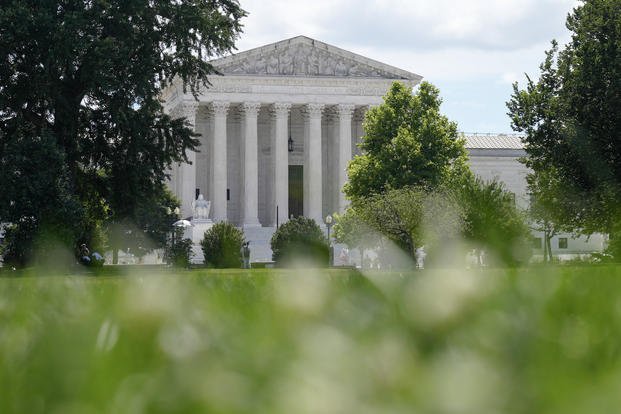
The U.S Supreme Court is viewed from the lawn of the U.S. Capitol, June 20, 2024, in Washington.
The Supreme Court will hear oral arguments Wednesday in a case that challenges the Department of Veterans Affairs' handling of benefits applications and appeals, a question that could affect thousands of previously decided or current claims.
In the case Bufkin v. McDonough, the plaintiffs challenged decisions by the VA and the U.S. Court of Appeals for Veterans Claims denying benefits for health conditions. They argue that the Veterans Board of Appeals, and later, the appeals court, failed to apply a "benefit-of-the-doubt" rule that should have resulted in disability compensation awards.
By law, veterans are entitled to receive the benefit of the doubt when the presented evidence, either for or against approval, is close. The Veterans Appeals Court, established in 1988, weighs decisions by the Veterans Board of Appeals and is supposed to ensure that the board followed all regulations when making a decision, including giving "the benefit of the doubt to the claimant," according to the Veterans Benefits Improvement Act of 2002.
But veterans Joshua Bufkin, who served in the Air Force from 2005 to 2006, and Norman Thornton, a former Army soldier who served from 1988 to 1991, say the board and the courts, including the Federal Circuit Court of Appeals, did not follow the law when upholding the board's decision.
Both plaintiffs applied for benefits but were denied repeatedly by adjudicators and on appeal, with the VA deciding they were ineligible in Bufkin's case, or did not qualify for a ratings increase, as Thornton requested.
According to court documents, Bufkin served in the Air Force for six months during a time when his wife experienced mental health issues, and he was under tremendous strain to balance family and work life. He was awarded a hardship discharge after consulting an Air Force psychiatrist and later applied for VA health care and benefits, with VA doctors in disagreement over whether Bufkin had post-traumatic stress disorder and, if so, whether it was service-connected.
Adjudicators, the board and the court all rejected his disability compensation claim for PTSD.
Thornton was a soldier who deployed to Saudi Arabia and Kuwait during the Persian Gulf War, serving on a tank crew and performing combat lifesaving duties. He applied for disability benefits in 2005 and received a 10% disability rating for PTSD. That later was upgraded to 50%, a decision he appealed and was denied.
In both cases, the Veterans Board of Appeals considered the evidence, which, in Bufkin's case, conflicted, and in Thornton's case, did not support a higher disability rating.
When the cases went before the Veterans Court of Appeals, the court determined that no errors were made by either the adjudicators or the board. The court did not conduct a benefit-of-the-doubt review, and the Federal Circuit Court of Appeals agreed it was not necessary.
The plaintiffs appealed to the Supreme Court, arguing that the lower court was wrong, given that the law spells out that veterans deserve the benefit of the doubt.
"The Federal Circuit ignored the plain text of the statute and frustrated Congress's clear intent to provide for enhanced appellate review and enforcement of the benefit-of-the-doubt rule," attorneys wrote in their petition to the highest court.
The VA argued that the claims were properly handled, with Bufkin failing to provide evidence that his condition was service-connected or that he even had PTSD, and Thornton, who received a benefit-of-the-doubt decision that resulted in a 50% disability rating, did not meet the criteria for a 70% rating.
VA attorneys said the Court of Appeals and the Federal Circuit both ruled appropriately and the law only requires the Veterans Court of Appeals to review board decisions for error, not to review benefit-of-the-doubt determinations.
"Even if the question presented warranted this court's review, these cases would be poor vehicles in which to address it," Justice Department attorneys for VA Secretary Denis McDonough wrote in response.
A ruling in favor of Bufkin and Thornton could force changes in how the VA appeals court considers such cases, potentially changing the outcome of claims currently under consideration as well as past claims.
Renee Burbank, director of litigation for the National Veterans Legal Services Program, one of the nonprofits that filed a brief to the court supporting the plaintiffs, said Tuesday a decision to overturn the ruling could put the veterans court in a stronger position to examine the evidence and make more decisions than it currently does.
It also could help speed up the legal process regarding appeals, since currently, claims may languish in the court for years as veterans file repeated appeals that never come under benefit-of-the-doubt consideration, she said.
A ruling in favor of the plaintiffs would not be a huge burden on the court, she said.
"[It would require the court to get] a sense of whether the board looked at all of it and made an analysis of whether evidence was in a rough approximate balance, and if so, [a] tie goes to the veteran," Burbank said.
Additional groups that filed amicus briefs favoring the plaintiffs included Disabled American Veterans, the National Law School Veterans Clinic Consortium, Military-Veterans Advocacy and the Federal Circuit Bar Association.
US ARMY SPC 5 whitefish Reporting
Viet-Nam Combat Veteran
The following tables show 2025 Department of Veterans Affairs monthly disability rates for veterans with a rating of 10% or higher. These amounts are effective Dec. 1 of each year. They are tax-free.
VA disability payments are made to veterans who got sick or injured while serving in the military and to veterans whose service made an existing condition worse.
You may qualify for VA disability benefits for physical conditions (such as a chronic illness or injury) and mental health conditions (such as post-traumatic stress disorder or PTSD) that developed before, during, or after service.
An annual payment increase is tied to an increase in Social Security payments by the U.S. government known as a cost-of-living adjustment (COLA).
*The following 2025 rates are tentative based on the 2.5% Cost of Living Adjustment announced by the Social Security Administration on Oct. 10, 2024. The Department of Veterans Affairs will announce the official rates later.
*10%-20% Disability
Percentage
Rate
10%
$175.51
20%
$346.95
*30%-60% Disability
Dependent Status
30%
40%
50%
60%
Veteran Alone
$537.42
$774.16
$1,102.04
$1,395.93
Veteran with Spouse
$600.97
$859.24
$1,208.64
$1,524.05
Veteran with Spouse and Child
$648.12
$921.76
$1,286.54
$1,617.33
Veteran with Child
$579.44
$830.54
$1,172.76
$1,481.00
Each Additional Child Under 18
$31.78
$42.03
$52.28
$63.55
Each Additional Schoolchild Over Age 18
$102.50
$136.33
$171.18
$205.00
Additional for Disabled spouse
$58.43
$77.90
$97.38
$116.85
*70%-100% Disability
Dependent Status
70%
80%
90%
100%
Veteran Alone
$1,759.19
$2,044.89
$2,297.96
$3,831.30
Veteran with Spouse
$1,907.81
$2,215.04
$2,489.63
$4,044.91
Veteran with Spouse and Child
$2,017.49
$2,340.09
$2,630.06
$4,201.34
Veteran with Child
$1,858.61
$2,158.66
$2,426.08
$3,974.15
Each Additional Child Under 18
$73.80
$84.05
$95.33
$106.14
Each Additional Schoolchild Over 18
$239.85
$263.68
$308.53
$342.85
Additional for A/A spouse
$137.35
$156.83
$176.30
$195.92
*30%-60% Disability (With Dependent Parents)
Dependent Status
30%
40%
50%
60%
Veteran with One Parent
$588.67
$841.81
$1,187.11
$1,498.43
Veteran with Two Parents
$639.92
$909.46
$1,272.19
$1,600.93
Veteran with One Parent and Child
$630.69
$898.19
$1,257.84
$1,583.50
Veteran with Two Parents and Child
$681.94
$965.84
$1,342.91
$1,686.00
Veteran with Spouse, One Parent and Child
$699.37
$989.41
$1,371.61
$1,719.83
Veteran with Spouse, Two Parents and Child
$750.62
$1,057.06
$1,456.69
$1,822.33
*70%-100% Disability (With Dependent Parents)
Dependent Status
70%
80%
90%
100%
Veteran with One Parent
$1,879.11
$2,181.21
$2,451.71
$4,002.74
Veteran with Two Parents
$1,999.04
$2,317.54
$2,605.46
$4,174.18
Veteran with One Parent and Child
$1,978.54
$2,294.99
$2,579.83
$4,145.59
Veteran with Two Parents and Child
$2,098.46
$2,431.31
$2,733.58
$4,317.03
Veteran with Spouse, One Parent and Child
$2,137.41
$2,476.41
$2,783.81
$4,372.78
Veteran with Spouse, Two Parents and Child
$2,257.34
$2,612.74
$2,937.56
$4,544.22
Increased Disability Payments for Veterans With Dependents
Veterans entitled to compensation who have a disability rated at 30% or more are entitled to additional compensation for dependents. Dependent children between the ages of 18 and 23 must be attending school and a dependent for tax purposes.
Parents may be considered dependents if the veteran provides more than 50% of their support. Veterans with a disabled spouse may also be eligible for increased benefits. Check with the VA for details.
US ARMY SPC 5 whitefish Reporting
Viet-Nam Combat Veteran